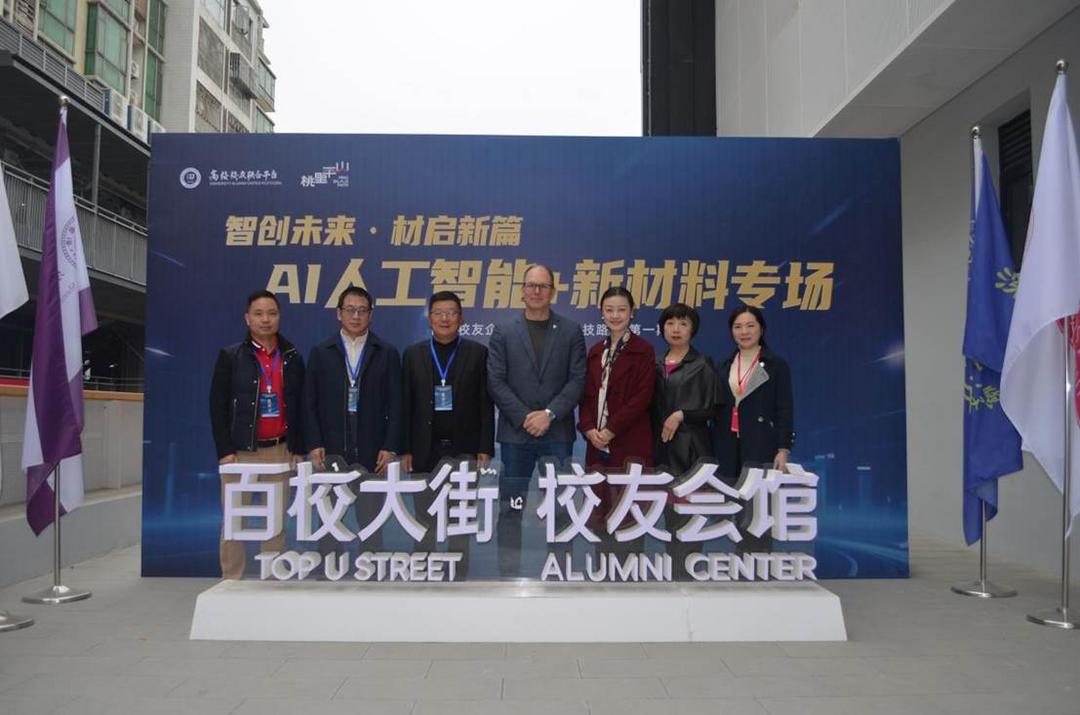
On December 26, 2025, a high-end themed conference focusing on the cutting-edge development and diverse impacts of artificial intelligence was successfully held at the Alumni Association on Baixiao Street in Shenzhen. Professor Martin Westgard from the University of Cambridge was invited to deliver a keynote speech on the topic of "AI Thinking and Decision Making under Uncertainty". He delves into the core propositions and deep challenges of artificial intelligence development from multiple dimensions such as technological evolution, typical application scenarios, employment structure impacts, and global regulatory frameworks, bringing a forward-looking and speculative sharing of ideas.

Professor Martin Westergaard said in an interview with the Greater Bay Area Times that the development of AI in China depends more on how Chinese entrepreneurs use it to develop different application directions. In the United States, AI is mostly driven by scientists, dedicated to updating and iterating models. He emphasized that the development of AI does not exist in isolation, and its deep integration with fundamental disciplines is the key to technological breakthroughs.
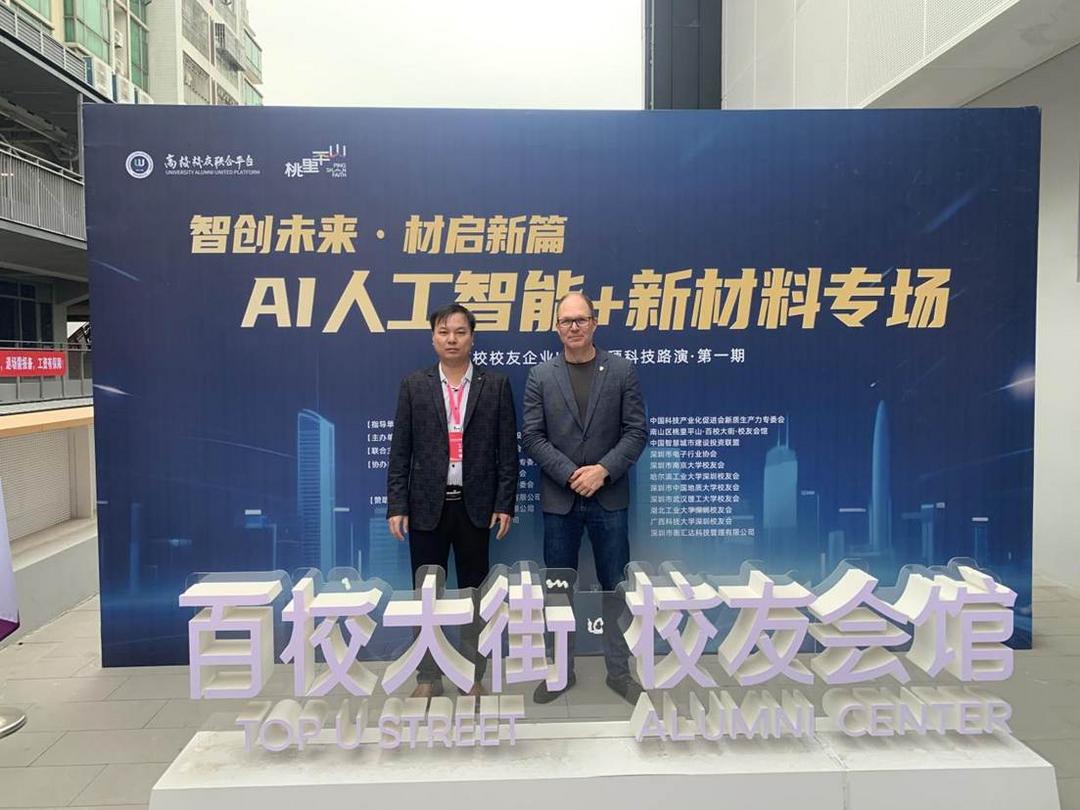
Professor Martin Westgard from the University of Cambridge (pictured on the right) and journalist from the Greater Bay Area Times.
Empowering AI research from a neuroscience perspective
At the beginning of the conference, the organizers provided dual translation support to break down language barriers: one was a mobile translation software obtained by participants through scanning codes, and the other was Professor Martin Westergaard's built-in screen real-time translation system.

Professor Martin Westergaard mentioned in his opening remarks that his core research field is neuroscience, which differs from the professional backgrounds of most of the attendees present. However, as an important bridge connecting neuroscience and artificial intelligence, computational neuroscience can provide a unique research perspective for the development of AI.
Martin Vestergaard is a professor and computational neuroscientist at Wolfson College, Department of Psychology, Development and Neuroscience, University of Cambridge. The main research areas cover decision psychology, mental health and communication, theoretical and functional relationships between communication cognition and economic structure, and long-term focus on the cognitive mechanisms of auditory functions such as perception and cognitive separation of competitive speech and auditory scale perception.
He said, 'My major focuses on the decision-making process of the human brain. From the perspectives of psychology and economics, these research results can naturally be extended to the exploration of AI decision-making mechanisms, providing reference for colleagues in different academic fields.'. ''
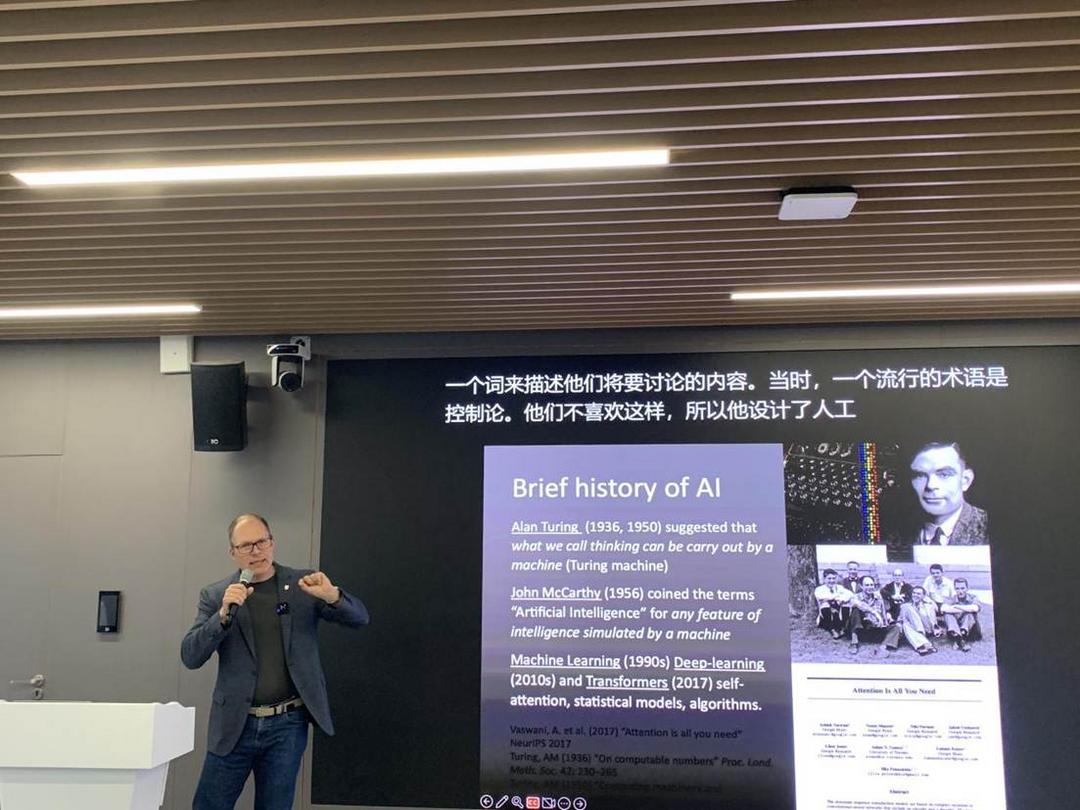
Tracing the development trajectory of AI and breaking down its evolutionary logic
During the theme sharing session, Professor Martin Westergaard led the live audience to trace the development process of artificial intelligence and correct the common perception that "AI is a new thing in recent years". He pointed out that the fundamental concept of AI can be traced back to nearly a century ago, and multiple key nodes jointly promoted the iterative upgrading of technology:
In 1936 and 1950, Alan Turing published two heavyweight papers, first proposing the core idea that "machines can think in principle". The argument is divided into two stages: firstly, it proposes that "any problem that can be described as an algorithm can be solved by machines", which is a highly forward-looking viewpoint born in an era without relevant technological support; Subsequently, it was further expanded to 'If' thinking 'can be understood as an algorithm, then machines can in principle implement thinking', laying the theoretical foundation for AI.
In 1956, scientist John McCarthy abandoned the popular term "cybernetics" and created the concept of "Artificial Intelligence (AI)" to organize interdisciplinary seminars, defining it as "any aspect of human intelligence that can be automated". This definition is still widely accepted today.
In the 1990s, the term 'machine learning' became popular, with the core goal of equipping computers with the ability to complete simple human tasks, such as early speech recognition systems recognizing individual spoken words.
In 2017, papers related to Transformer models were published, which laid a key foundation for the development of large-scale language models such as DeepSeek and ChatGPT, and propelled AI into a new stage of cognitive task solving.
Many of the AI concepts we apply today actually stem from early academic explorations, and the development of technology is a gradual and constantly accumulating process. Martin Westgard concluded.
Analyzing AI application scenarios and focusing on cognitive tasks
When it comes to the current implementation and application of AI, Professor Martin Westergaard, based on his own experience and industry practice, listed several typical cases:
Service area: Several hotels stayed in during this trip have commonly used robots to provide room service, replacing traditional manual delivery work;
Industry and transportation: robots have been used in manufacturing for many years, and the technology of autonomous vehicle has become increasingly mature, which can independently complete complex operations such as parking;
In the medical field, specialized assistive robot systems have emerged to improve surgical accuracy and safety;
In the field of intelligent interaction, large-scale language models such as ChatGPT and DeepSeek can generate language based content, as well as generative AI that can generate creative content such as funny images.
Martin Westgard emphasized that robot technology has already achieved the landing of "automated tasks", such as assembly processes in automobile manufacturing and hotel room service. The core breakthrough of current AI technology lies in the solution to "cognitive tasks" - the emergence of large language models that enable AI to handle complex cognitive needs, which is also a key reason for its widespread attention.
Interactive collision viewpoint hits the real challenges of AI development
In the interactive Q&A session, participants raised questions about hot topics such as the application prospects, employment impact, and regulatory policies of AI and embodied robots. Professor Martin Westergaard responded one by one from a professional perspective and real-life cases, triggering deep thinking throughout the audience.
Regarding the question of which industry or track AI and embodied robots will be applied to first in the next three to five years, Professor Martin Westergaard responded that instead of being fixated on specific industries, more attention should be paid to which tasks can be solved by AI. He pointed out that automation in fields such as automobile manufacturing and room service has been initially implemented, and the future expansion of AI applications will focus on replacing cognitive tasks. The combination of embodied robots and AI aims to equip robots with more complex cognitive abilities, enabling them to perform more tasks that require judgment and analysis. Their application scenarios will continue to expand with breakthroughs in cognitive tasks.
Regarding the impact of AI on employment, Professor Martin Westergaard shared key research conclusions: Relevant analysis shows that the impact of AI on the job market presents a characteristic of "the middle layer being most severely affected" - the most basic manual work (such as simple physical labor) and the highest level management work (such as strategic decision-making and complex coordination work) are less affected, while the middle level work (such as ordinary clerical and basic professional support work) faces the greatest risk of being replaced.
If more and more cognitive tasks are completed by AI systems, those who keep their jobs may become 'operational appendages' of AI, only responsible for monitoring and operating the system, and the value of their core cognitive skills will be weakened. This is a very distressing situation. ''
A participant from the legal industry shared a practical case on site: "My team has now replaced the work of legal assistants with AI, and the demand for junior lawyers has greatly decreased, but the roles of senior lawyers and partners cannot be replaced. This case confirms Professor Martin Westergaard's view that 'intermediate level work is impacted'.
Focusing on the issue of AI regulation, Professor Martin Westergaard pointed out that the core difficulty of AI regulation lies in accountability tracing. He took autonomous vehicle as an example: "When an autonomous vehicle is involved in an accident, the responsibility should be borne by the owner, manufacturer or technology provider? There is no unified answer to this question at present." He explained that, precisely based on the consideration of responsibility accountability, many AI systems will retain human decision-making links. Even if the car can park itself, it will also be equipped with a screen to display the running status, which will facilitate human intervention in a timely manner. Although AI can operate completely autonomously, it is a common practice in the current industry to assign monitoring responsibilities to humans, which can provide clear basis for determining responsibility. ''
When it comes to global regulatory trends, Professor Martin Westergaard said that major regions such as the United States, the United Kingdom, Europe, and China are all promoting AI regulatory policies, but cultural differences in different regions will lead to different regulatory orientations: some regions focus more on safeguarding individual rights and freedoms, while others emphasize the maintenance of collective welfare. This difference may lead to some tension in the global regulatory system. He believes that the future direction of AI regulation requires countries around the world to jointly explore and form a regulatory framework that balances development and security based on their own realities.
Multiple cutting-edge projects appear at roadshows to empower AI upgrades
This event also arranged for 6 outstanding projects to be showcased, covering multiple popular fields such as AI algorithms and industry applications, artificial intelligence, and cutting-edge new materials.
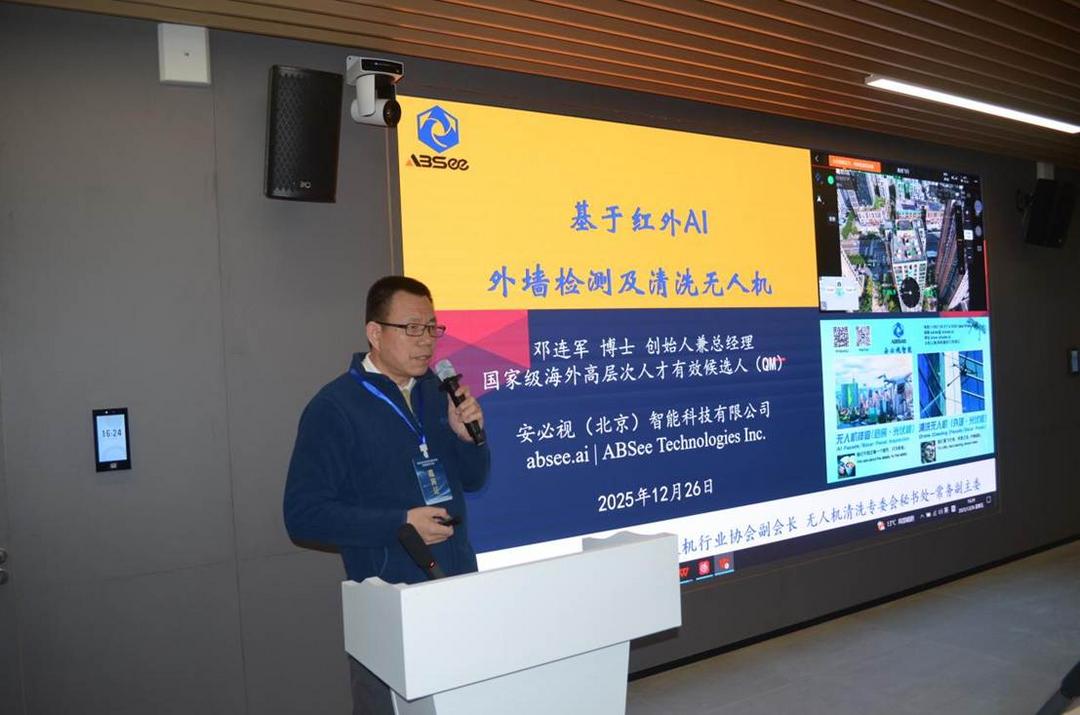
In the field of AI+industry applications, the intelligent exterior wall detection and cleaning drone project has performed outstandingly. The project focuses on infrared weak target recognition technology and has launched two major product lines for exterior wall detection and cleaning drones. It has also participated in the compilation of the first domestic drone cleaning group standard. Its detection efficiency is 10 times higher than traditional "Spider Man", cleaning efficiency is 5 times higher, and accuracy reaches 99.99%. It relies on independently developed flight control systems to ensure stability in complex environmental operations. At present, the project has achieved mass production, serving customers in multiple regions, and is promoting a financing of 15 million yuan, with plans to go public in 2027.
Multiple characteristic projects have emerged in the field of AI and artificial intelligence. Pocket Companion Robot takes "warm companionship" as its core, creating a "childlike revival cabin" to revive children's toy creativity. Pocket Companion Robot precisely matches the needs of family members, making technology full of warmth. AI active health management project takes "Xiaoxi AI" as the core engine, focuses on the health management of cardiovascular and cerebrovascular diseases of the elderly, realizes the noninvasive collection of physiological data through intelligent wearable devices, and realizes real-time identification and early warning of risk events with the help of edge computing and cloud collaborative analysis, opens the whole service chain, and improves service efficiency by more than 40 times. Xueyouyoujiao AI is positioned as a "quiet self-study space+exclusive AI learning companion", with core functions such as photo recognition, dialogue and questioning, automatic homework correction, and similar push notifications for incorrect questions, accurately helping to improve the learning situation. The Sanjingling AI Boundless Public Platform is built by a core team with a background in Huawei, focusing on hybrid office scenarios. It can achieve 80% remote office positions, help enterprises reduce costs and increase efficiency by 80%, and build a new paradigm of borderless office.
The Junyue fiber decoration project in the field of cutting-edge new materials also has outstanding strength. The company originated from the research team of the Chief Scientist of the National Key R&D Program and has been deeply involved in the field of composite materials resistant to extreme environments for 20 years. Its low-temperature liquid oxygen compatible resin has been applied to the Long March 12 rocket, overcoming the problem of cold helium pressurized gas cylinders for composite materials in liquid oxygen environments and breaking the foreign technology blockade. The series of products developed, including composite material fairings and low-temperature hoses, will be widely used in industries such as aerospace and low altitude economy.
Collaborative efforts from multiple parties to build a highland for AI development and alumni co creation
This event is hosted by the Joint Platform of University Alumni and the Capital Venture Committee, and co organized by the Legal Special Committee of the Tsinghua University Alumni Association, the Angel Wheel Special Committee of the Capital Venture Committee, and the Mergers and Acquisitions Special Committee of the Capital Venture Committee in Shenzhen. It has received strong support from the New Quality Productivity Special Committee of the China Association for the Promotion of Science and Technology Industrialization, the Alumni Association of Taoli Pingshan, Baixiao Street, Nanshan District, and the China Smart City Construction Investment Alliance.
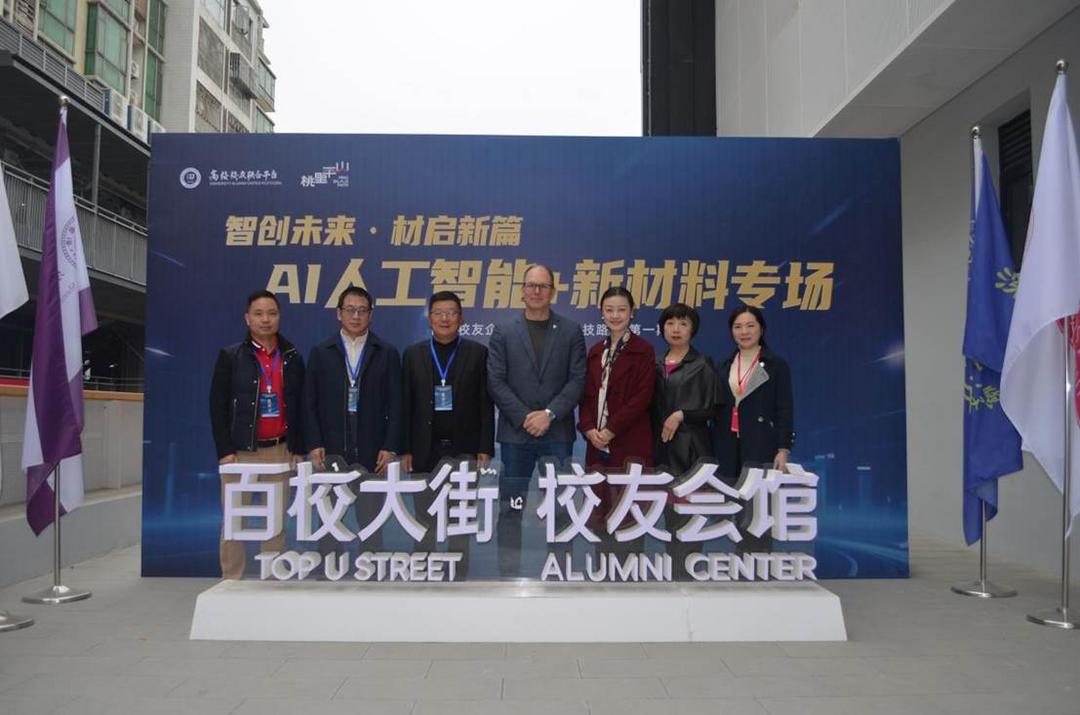
The event venue, Baixiao Street and Alumni Association, is located in the Xilihu International Science and Education City area of Nanshan District, Shenzhen, with a total area of 2100 square meters. With the core positioning of "Alumni Reception Room", it provides a full scene communication and co creation space, and is committed to creating the "first stop" for global alumni visiting Shenzhen; The guiding unit of the university alumni alliance platform was jointly initiated and created by the Shenzhen alumni associations of six universities including Tsinghua University, Peking University, Nanjing University, Sun Yat sen University, Tongji University, and Wuhan University on August 8, 2009. As of now, it has integrated more than 340 university alumni association resources, providing solid support for cross-border exchanges and alumni co creation.
The successful holding of the "Intelligent Creation Future · New Materials Chapter - AI Artificial Intelligence+New Materials Special Session" event not only provides a platform for academic exchange and ideological collision, but also allows participants from different professional backgrounds to focus on the core issues of AI development, jointly explore the balance between technological progress and social development, and inject ideological power into the healthy and orderly development of artificial intelligence.