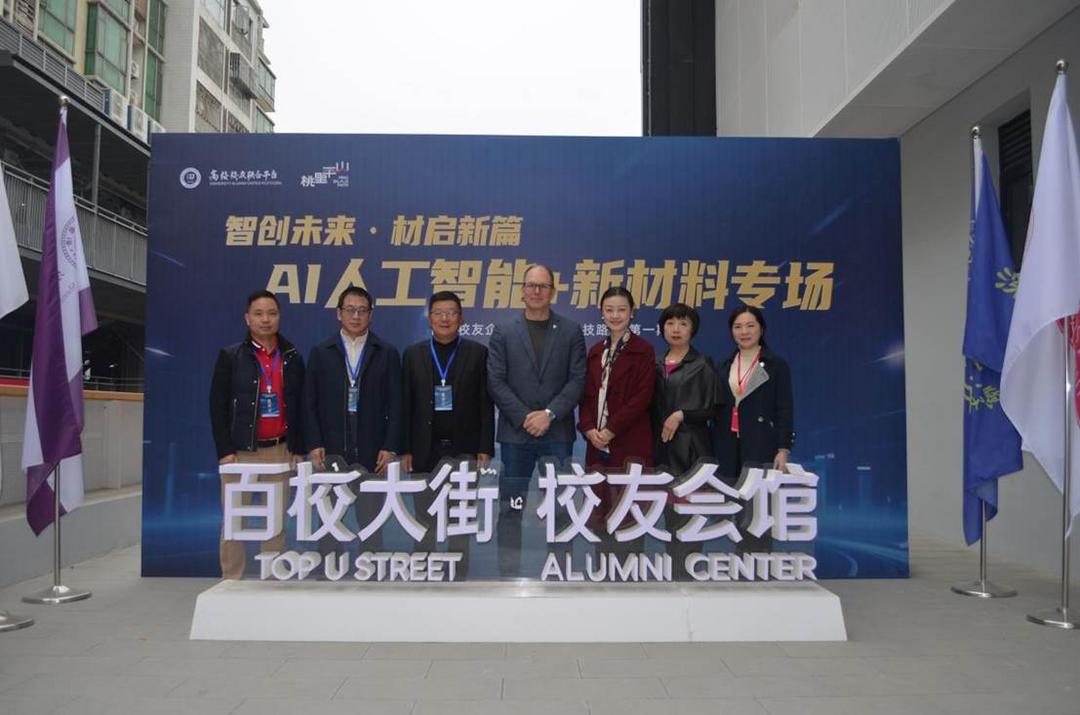
(Cultural Committee Member of the Central Committee of the Zhigong Party of China, General Manager of CCTV New Film Internet Television Co., Ltd.)
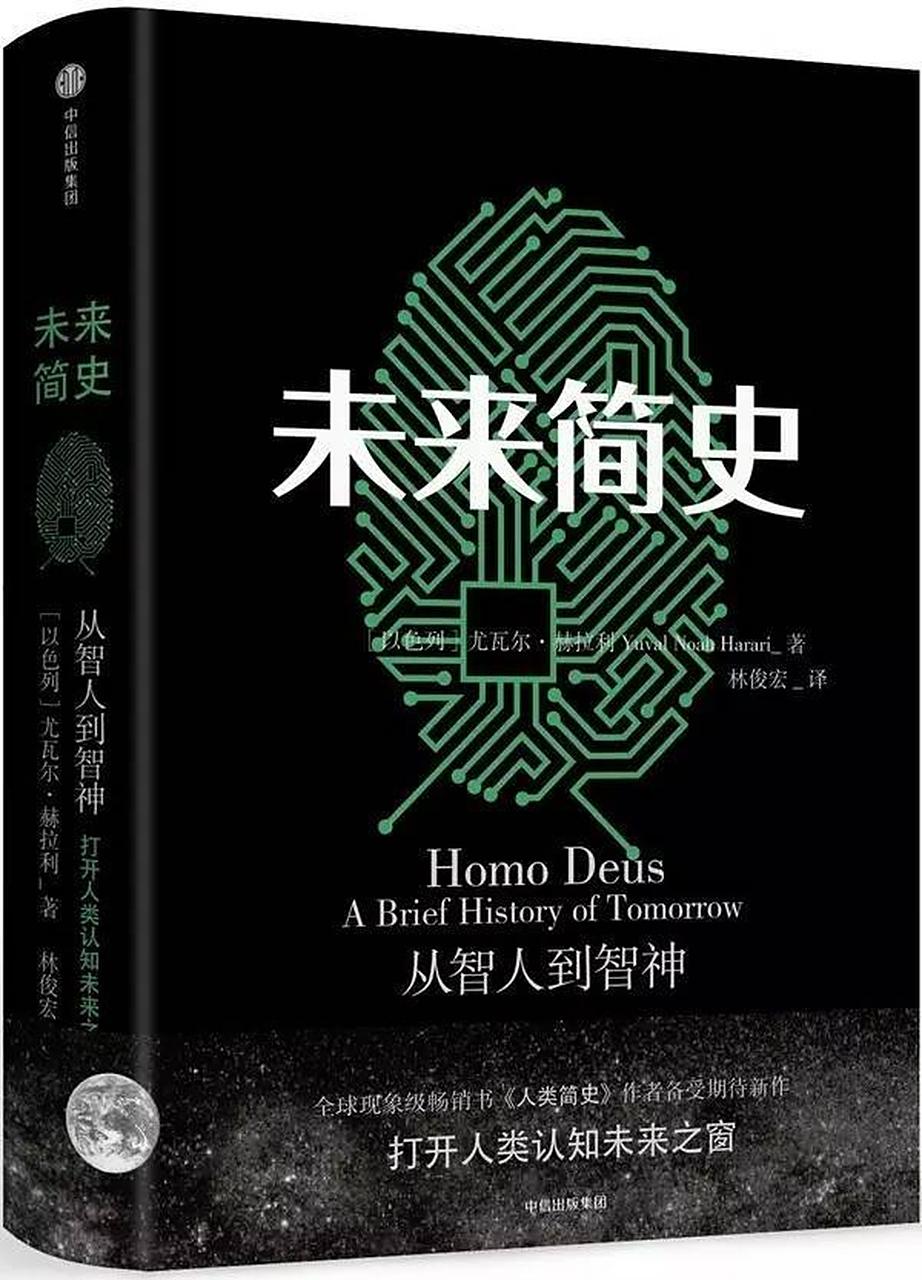
Yuval Harari predicted in "A Brief History of the Future" that when algorithms understand themselves better than we do, humanity will divide into a few "divine beings" and a majority "useless class". This prophecy is quietly being fulfilled in the accelerated weaving of the information cocoon - recommendation algorithms, under the name of "precise feeding," trap individuals in the echo chamber of cognition and tear society apart into incompatible parallel universes. Even more dangerous is the rise of dataism as a new religion, claiming that all meaning resides in the flow of data and that free will is merely an illusion of biological algorithms.
We are standing at the last crossroads in human history: to the left is to submit to the altar of dataism, relinquish subjectivity, and wait to be defined as' useless' by algorithms; To the right is to actively break through the cocoon, rebuild the cognitive community, and establish the irreplaceability of human beings in collective wisdom. This is not a fork in the road of technological evolution, but the ultimate choice concerning the survival of civilization.
Information Cocoon Room: Incubator for Useless Classes
The 'useless class' warned by Harari is not due to a lack of ability, but rather an inevitable product of cognitive narrowing. When algorithms continue to reinforce existing preferences, individual perspectives are compressed to a single dimension, and critical thinking and cross-border creativity wither in the hotbed of information homogenization. Even more deadly, dataism has completed its closed-loop argument here - the behavior of individuals trapped in cocoons becomes increasingly predictable, making machines appear more "intelligent"; And the 'intelligence' of machines in turn proves the falsehood of human free will. This self fulfilling prophecy is creating a self giving population: they are neither needed to understand the big picture, nor have they the willingness and ability to understand the big picture.
The first step in breaking the information cocoon is to reconstruct the algorithm logic. Traditional recommendation systems must shift towards' context aware streaming ', actively pushing heterogeneous content when users are detected to be trapped in information narrowness. This is not only a technological improvement, but also an ethical shift - platforms need to transform from "attention merchants" to "cognitive ecological engineers". As a subordinate enterprise of CCTV New Film Group, CCTV New Film Internet Television Co., Ltd. (hereinafter referred to as CCTV New Film) has made breakthroughs in its practice in this sense: its content layout deliberately breaks the algorithm isolation in the vertical field, and carries out "mandatory" cross recommendation of hard core technology, humanistic thinking, and people's livelihood documentary. This seemingly "inefficient" approach is essentially rebuilding the "weak connections" of users' cognition, allowing different perspectives to naturally collide in the information flow. When viewers watch rural revitalization documentaries, the algorithm no longer pushes similar themes, but long videos related to quantum computing or climate change, and the boundaries of cognition are gently widened unintentionally.
Knowledge Sharing: Antibodies Against Dataism
The fundamental threat of dataism is that it reduces humans to nodes in the data stream, with meaning only limited to information processing efficiency. But "A Brief History of the Future" overlooks the most crucial point: the unique "web of meaning" of humanity is not calculated through data, but woven through value choices in knowledge sharing. When individuals actively share, debate, and revise their viewpoints, they are not only data producers, but also meaning providers - this is the essence of human nature.
The concept of the World Intelligence Cooperation Organization (WICO) provides a global reference for this. It uses blockchain technology to achieve "data available but invisible", transforming knowledge sharing from a "zero sum game" to a "win-win ecosystem" while protecting sovereignty and privacy. The construction of the "Image Knowledge Base" by CTV New Film is similar to this: its platform not only aggregates content, but also generates cross validation and critical reconstruction of knowledge through a tripartite dialogue mechanism of "creator expert audience" in the flow. A short video about the application of agricultural drones will trigger pattern interpretation from technical experts, ethical questioning from sociologists, and experience supplementation from frontline farmers. This multi-level knowledge sharing makes data no longer a cold predictive material, but a medium for generating public value. Dataism encounters a paradox in its inherent logic - when humans actively share the highest quality data (i.e. knowledge that has been reflected and debated), algorithmic predictions actually strengthen rather than weaken human subjectivity.
Human Community: Beyond the Fate of Algorithms
Herali's pessimistic prophecy is based on technological determinism, but history has repeatedly proven that the collective awakening of humanity can always open up a third path beyond technological logic. The practice of CTV New Film reveals a key shift from "algorithmic feeding" to "co creation of issues". Its platform regularly launches the "Human Crossroads" series of planning, inviting viewers to vote on in-depth reporting topics - from medical ethics of AI misdiagnosis to discrimination in algorithm recruitment. This mechanism transforms users from passive recipients to co creators of meaning production, and every vote and discussion is an active removal of the label of 'useless'.
The deeper significance lies in providing micro samples for global intelligence co governance. When knowledge sharing becomes a platform culture and diversified supply is internalized as a business model, CTV New Film is actually practicing a popularization education of media literacy. Through frequent exposure to heterogeneous information, audiences gradually acquire the ability to manage cognitive dissonance and cultivate an endogenous drive to actively seek diverse perspectives. This kind of individual "detachment" converges into cognitive resilience at the social level - even if the external algorithmic environment continues to deteriorate, citizens with media literacy can still independently weave a "cognitive escape route".
Conclusion: Between gods and mortals
The endpoint of 'A Brief History of the Future' is the birth of divine beings and the extinction of mortals. But 'divinity' should not be defined as stronger data processing capabilities, but rather as a clear understanding of the limitations of algorithms and an eternal commitment to the complexity of human nature. Breaking through the information cocoon is not about returning to the pre modern era of information scarcity, but about rebuilding the web of meaning at the human scale in the torrent of data.
The exploration of Zhongshi Xinying shows that media platforms can fully become the "digital infrastructure" of this cognitive revolution - it does not have to wait for the completion of global governance mechanisms, nor does it have to rely on the conscientious discovery of technology giants. By embedding a "diversity coefficient" in content production, algorithm design, and community governance, and injecting the gene of knowledge sharing into every recommendation and interaction, it is proving that the right to choose at the last crossroads of humanity is never in the hands of gods, but in the hearts of every individual who refuses to be defined and insists on sharing and thinking.
When the collision of different viewpoints becomes a daily occurrence, and knowledge sharing becomes a global culture, the information cocoon will eventually become a footnote to history. At that time, when we look back, we will find that Herali's prophecy was only half right: there were indeed some people who would become "divine beings" - those who always held cognitive sovereignty and constantly evolved in collective wisdom. And the rest are not 'useless classes', but potential divine beings who have not yet awakened.